How Much Money to Start Investing in Soccer Cards?
How Much Money Do You Need to Start Investing in Soccer Cards?
The most common question from aspiring soccer card investors is straightforward: how much money do I actually need? The answer ranges from $300 for a focused starter portfolio to $3,000+ for a diversified premium collection. But the dollar amount alone does not tell the full story — what matters is how efficiently you allocate your capital and whether you account for hidden costs that can erode returns.
This guide provides specific buy lists at three budget tiers using real eBay prices from our database, breaks down every hidden cost, and sets realistic ROI expectations. It is part of our Soccer Card Investment Guide 2026 series.
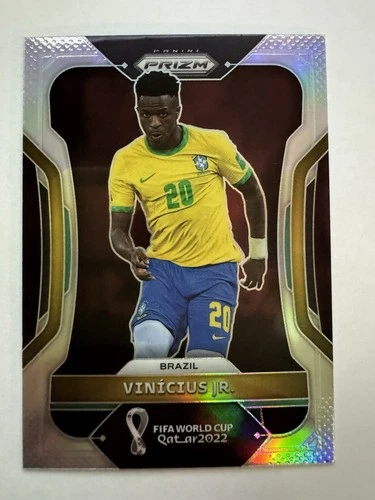
Tier 1: The $300 Starter Portfolio
Three hundred dollars is enough to build a legitimate investment portfolio — not a random stack of cards, but a structured collection with specific investment theses for every purchase. At this budget, you are focused entirely on emerging players with high upside and low entry prices.
The $300 Buy List
| # | Card | Price | Qty | Total | Investment Thesis |
|---|---|---|---|---|---|
| 1 | Erling Haaland 2026 Topps Chrome | $11 | 5 | $55 | Premier League top scorer, World Cup dark horse with Norway |
| 2 | Jude Bellingham 2026 Prizm Silver | $12 | 5 | $60 | Real Madrid star, England World Cup catalyst |
| 3 | Bukayo Saka 2026 Chrome Refractor | $14 | 5 | $70 | Arsenal talisman, England key player |
| 4 | Gavi 2026 Prizm Silver | $18 | 3 | $54 | Barcelona & Spain starter, injury bounce-back candidate |
| 5 | Lamine Yamal 2026 Prizm Base | $12 | 3 | $36 | Generational talent, 18 at World Cup, massive long-term upside |
| Total Invested | $275 | ||||
| Cash Reserve | $25 | ||||
Why this works: Every card in this portfolio costs under $20, which means even a total loss on one position only costs you $55-70. But the upside is significant — if Bellingham or Saka lead England deep into the World Cup, their cards could triple from current prices. Five copies of each gives you the ability to sell incrementally (2 at 2x, 2 at 3x, hold 1 long-term).
What you cannot do at $300: You cannot afford premium cards (Messi $246, Mbappe $167, Vinicius Jr $142). You also cannot afford grading fees, which would consume 10-30% of your entire portfolio. At this tier, buy raw cards only and focus entirely on capital appreciation.
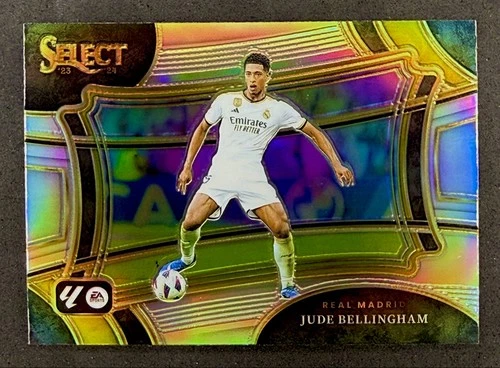
Tier 2: The $1,000 Core Portfolio
One thousand dollars is the sweet spot where you can start following the 40-30-20-10 framework properly. You have enough capital to hold one premium card, diversify across emerging players, and start building toward graded holdings.
The $1,000 Buy List
| # | Card | Price | Qty | Total | Category |
|---|---|---|---|---|---|
| 1 | Kylian Mbappe 2026 Select Base | $150 | 1 | $150 | Foundation |
| 2 | Vinicius Jr 2026 Prizm Silver | $142 | 1 | $142 | Foundation |
| 3 | Pedri 2026 Select Base | $80 | 1 | $80 | Emerging |
| 4 | Jude Bellingham 2026 Prizm Silver | $12 | 10 | $120 | Emerging |
| 5 | Bukayo Saka 2026 Chrome Refractor | $14 | 7 | $98 | Emerging |
| 6 | Erling Haaland 2026 Topps Chrome | $11 | 8 | $88 | Emerging |
| 7 | Gavi 2026 Prizm Silver | $18 | 4 | $72 | Emerging |
| 8 | Lamine Yamal 2026 Chrome Base | $15 | 4 | $60 | Speculative |
| Total Invested | $810 | ||||
| Reserved for Grading (2 cards) | $80 | ||||
| Cash Reserve | $110 | ||||
Framework alignment:
- Foundation (40% target): $292 invested (29%) — slightly below target, compensated by cash reserve for buying dips
- Emerging (30% target): $378 invested (38%) — overweight emerging because this tier offers the best risk-reward at the $1,000 level
- Graded (20% target): $80 reserved — submit your 2 best-condition cards for PSA grading once you receive them
- Speculative (10% target): $60 invested (6%) + remaining cash reserve
Key advantage over $300: At $1,000, you hold two premium cards (Mbappe Select $150, Vinicius Jr Prizm Silver $142) that provide downside protection. Even in a market downturn, these cards are unlikely to lose more than 20-25% — they are blue chips. Your emerging positions are diversified across five players, so no single player's injury or poor performance can sink your portfolio.
Tier 3: The $3,000+ Premium Portfolio
At $3,000, you enter the realm of serious card investing. You can fully implement the 40-30-20-10 framework, hold multiple premium Prizm Silvers, build a meaningful graded collection, and maintain enough cash reserves to capitalize on market dislocations.
The $3,000 Buy List
| # | Card | Price | Qty | Total | Category |
|---|---|---|---|---|---|
| 1 | Lionel Messi 2026 Prizm Silver | $246 | 2 | $492 | Foundation |
| 2 | Kylian Mbappe 2026 Prizm Silver | $167 | 2 | $334 | Foundation |
| 3 | Vinicius Jr 2026 Prizm Silver | $142 | 2 | $284 | Foundation |
| 4 | Pedri 2026 Select Base | $80 | 3 | $240 | Emerging |
| 5 | Jude Bellingham 2026 Prizm Silver | $12 | 15 | $180 | Emerging |
| 6 | Bukayo Saka 2026 Chrome Refractor | $14 | 12 | $168 | Emerging |
| 7 | Erling Haaland 2026 Topps Chrome | $11 | 10 | $110 | Emerging |
| 8 | Gavi 2026 Prizm Silver | $18 | 8 | $144 | Emerging |
| 9 | Lamine Yamal 2026 Prizm Silver | $35 | 5 | $175 | Emerging |
| Total Card Purchases | $2,127 | ||||
| Reserved for Grading (6 cards at ~$50 each) | $300 | ||||
| Speculative Allocation | $300 | ||||
| Cash Reserve | $273 | ||||
Framework alignment:
- Foundation (40%): $1,110 invested (37%) — three elite players with 2 copies each. One copy for long-term hold, one for selling into World Cup hype.
- Emerging (30%): $1,017 invested (34%) — deep positions in 6 emerging players. Enough copies to sell incrementally at different price points.
- Graded (20%): $300 reserved for grading submissions. Submit your 6 best raw cards — if 3-4 come back PSA 10, your graded allocation will be worth $600+.
- Speculative (10%): $300 for tournament dark horses, transfer rumors, and opportunistic buys during the World Cup.
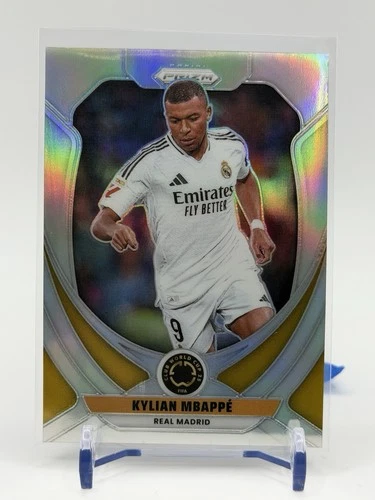
Hidden Costs That Eat Into Returns
Card investing has significant transaction costs that many beginners overlook. Failing to account for these costs leads to unrealistic return expectations and poor decision-making.
Grading Fees
| Service | Turnaround | Cost Per Card |
|---|---|---|
| PSA Economy | 6-9 months | $25 |
| PSA Regular | 2-3 months | $50 |
| PSA Express | 10-15 business days | $100 |
| BGS Standard | 3-6 months | $30 |
| BGS Express | 5-10 business days | $100 |
Impact on returns: A $25 grading fee on a $12 Bellingham card more than doubles your cost basis to $37. The graded card needs to sell for at least $50 (after eBay fees) just to break even. Only grade cards where the PSA 10 value is at least 3x your total cost (card price + grading fee). For sub-$20 cards, only use economy grading ($25) and only if you are very confident in the grade.
eBay Selling Fees
- Final value fee: 13.25% of the total sale price (including shipping)
- Payment processing: Included in the 13.25% for managed payments
- Promoted listing fee (optional): 2-10% additional for better visibility
Example: You sell a Messi Prizm Silver for $300 on eBay. After the 13.25% fee, you receive $260.25. If you paid $246, your actual profit is $14.25 — a 5.8% return, not the 22% implied by the $54 price difference. Always factor in selling fees when calculating target sell prices.
Shipping & Insurance
- USPS First Class (for cards under $50): $4-5 with tracking
- USPS Priority (for cards $50-200): $8-10 with tracking and insurance
- USPS Priority + insurance (for cards $200+): $12-20 depending on insured value
- Penny sleeves + top loaders (supplies): ~$0.30 per card
For cards you are buying, shipping is typically $4-8 added to the purchase price. For cards you are selling, shipping costs reduce your net proceeds unless you charge the buyer for shipping (which reduces your effective sale price due to eBay's fee calculation including shipping).
Storage & Protection
- Penny sleeves: $3 per 100
- Top loaders: $8 per 25
- One-touch magnetic holders (for premium cards): $5-8 each
- Fireproof safe (recommended for portfolios over $2,000): $100-300 one-time
These costs seem small individually but add up. A 20-card portfolio needs $15-20 in basic protection supplies. A premium portfolio with magnetic holders and a safe can cost $200+ just in storage.
Realistic ROI Expectations
Setting realistic expectations prevents emotional decision-making and premature exits. Here is what the data supports:
Conservative Scenario (Most Likely)
- Annual return: 10-20%
- Assumption: World Cup generates a moderate price spike (20-30%), you sell some positions into the hype, hold foundation cards long-term. No major injuries to your key players.
- After costs: 5-15% net return after eBay fees, shipping, and grading costs
- $300 portfolio example: Worth $345-375 after one year
- $1,000 portfolio example: Worth $1,100-1,200 after one year
- $3,000 portfolio example: Worth $3,300-3,600 after one year
Aggressive Scenario (Bull Case)
- Annual return: 50-100%
- Assumption: Multiple emerging players break out at the World Cup, driving 3-5x returns on your emerging allocation. Foundation cards appreciate 30-50% during tournament mania. You time exits well.
- After costs: 35-75% net return
- $300 portfolio example: Worth $450-525 after one year
- $1,000 portfolio example: Worth $1,500-2,000 after one year
- $3,000 portfolio example: Worth $4,500-6,000 after one year
Worst Case Scenario
- Annual return: -20% to -30%
- Assumption: Overall card market correction (like 2023), key players injured before World Cup, overproduction suppresses prices across sets.
- $300 portfolio example: Worth $210-240 after one year
- $1,000 portfolio example: Worth $700-800 after one year
- $3,000 portfolio example: Worth $2,100-2,400 after one year
Critical rule: Never invest money you cannot afford to lose. Soccer cards are an alternative asset with no guarantee of returns. Treat your card portfolio as 5-10% of your total investment allocation, not your primary savings vehicle.
Essential Tools for Card Investors
Regardless of your budget tier, you need the right tools to make informed decisions and track your portfolio.
- CardPriceIQ: Real-time eBay sold prices for soccer cards. Track price trends, compare across sets, and identify buying opportunities. This is your primary price intelligence tool.
- eBay Sold Listings: The raw data source. Filter by "Sold" to see actual transaction prices, not asking prices. CardPriceIQ aggregates this data automatically.
- PSA Card Facts: Population reports for graded cards. Essential for understanding how many PSA 10 copies exist of your holdings.
- Spreadsheet Tracker: Maintain a spreadsheet with columns for: Card Name, Purchase Date, Purchase Price, Current Value, Target Sell Price, Status. Update current values monthly using CardPriceIQ data.
- Card Scanner App: Use a phone app to photograph and catalog your collection. Useful for insurance documentation if your collection is stolen or damaged.
Getting Started: Your First Week Action Plan
- Day 1: Determine your budget tier ($300, $1,000, or $3,000+) and commit to it. Do not stretch beyond what you can afford to lose.
- Day 2: Create accounts on eBay (for buying/selling) and CardPriceIQ (for price tracking). Study the buy list for your tier.
- Day 3-4: Purchase your first 3-5 cards, starting with the highest-conviction picks. For Tier 1, start with Bellingham and Saka. For Tier 2, start with Mbappe Select Base and Vinicius Jr Prizm Silver. For Tier 3, start with the foundation Prizm Silvers.
- Day 5-6: Complete your buy list. Order card protection supplies (penny sleeves, top loaders).
- Day 7: Set up your tracking spreadsheet. Record every purchase with date, price, and platform. Set target sell prices for each position.
For the complete investment strategy including sell signals, risk metrics, and exit planning, read our comprehensive Soccer Card Investment Guide 2026. To understand which card sets offer the best investment returns, see Panini Prizm vs Topps Chrome: Which Set to Invest In? And for specific player picks, check out 5 Emerging Soccer Players to Invest In Before 2026 World Cup.
Frequently Asked Questions
Can I start investing in soccer cards with just $100?
Technically yes, but we recommend $300 as the minimum for a structured portfolio. At $100, you can only afford 5-8 budget cards, which severely limits diversification. A single player injury could wipe out a third of your portfolio. If $100 is your budget, buy 3-4 copies of one high-conviction emerging player (like Bellingham at $12) and hold until you can add more capital.
Should I buy one expensive card or many cheap ones?
It depends on your tier. At $300, diversification matters more than premium quality — buy many cheap cards. At $3,000+, you have enough capital for both premium foundation cards and diversified emerging positions. The worst strategy is buying one expensive card with all your capital and having no diversification. Even at $1,000, limit any single card to 15-20% of your portfolio.
How much should I budget for grading?
At the $300 tier, do not budget for grading at all — it consumes too much of your capital. At $1,000, reserve $80-100 for grading your 2 best-condition cards using PSA Economy ($25 each). At $3,000+, reserve $300+ and use PSA Regular ($50 each) for faster turnaround. Never grade a card unless the expected PSA 10 value is at least 3x your total cost (card price + grading fee + shipping).
When is the best time to buy soccer cards in 2026?
Right now — April 2026 — is one of the best buying windows of the year. Domestic league seasons are winding down, the World Cup hype cycle has not yet reached fever pitch, and prices are near their cyclical lows. Prices will begin rising sharply in May as squad announcements approach, and will peak during the June-July World Cup. Buying in August-September (post-tournament correction) will also offer good prices, but you will miss the World Cup catalyst.
What if the card market crashes like it did in 2023?
Market corrections are a normal part of the card market cycle. The 2023 correction saw prices drop 30-40% broadly, with speculative cards falling 50-70%. However, foundation holdings (elite players in Prizm Silver) only dropped 15-25% and recovered within 6-9 months. If a crash happens, follow these rules: do not panic sell, trim speculative positions to raise cash, and use that cash to add to foundation holdings at discounted prices. Corrections are when the best long-term returns are generated — but only if you have cash reserves to deploy.
Ready to start building your soccer card investment portfolio? Track real-time soccer card prices on CardPriceIQ → View Prices