Soccer Card Investment Guide 2026: Strategy & Portfolio
Soccer Card Investment Guide 2026: Strategy & Portfolio Building
Soccer trading cards have evolved from a childhood hobby into a legitimate alternative asset class. With the 2026 FIFA World Cup driving global demand and mainstream attention, the market is entering a period of extraordinary opportunity — and heightened risk. This comprehensive guide provides a structured, data-driven approach to building and managing a soccer card investment portfolio, whether you are starting with $500 or $5,000.
Unlike speculative flipping, true card investing requires a repeatable framework, clear risk metrics, and disciplined exit strategies. We have analyzed thousands of eBay sold listings and tracked price movements across every major set to build the playbook that follows. For a broader introduction to sports card investing across all categories, see our sports card investing guide.
Soccer Card Investing vs. Speculation
Before committing capital, it is essential to understand the difference between investing and speculating in the soccer card market. The distinction determines your time horizon, position sizing, and emotional resilience during downturns.
Investing: The Long Game
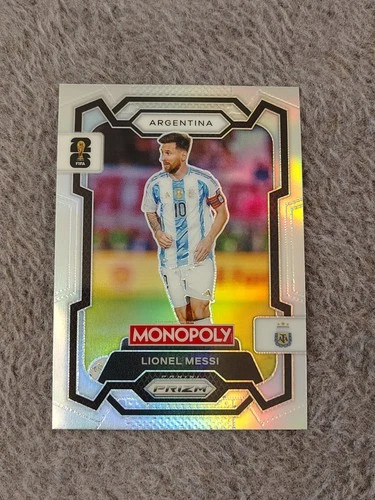
Card investing means acquiring assets you believe will appreciate over 2-10 years based on fundamental factors: player career trajectory, set prestige, print run scarcity, and long-term hobby demand. An investor buying a Lionel Messi 2026 Prizm Silver at $246 is betting on the enduring legacy of the greatest player in history, not next week's price spike.
- Time horizon: 2-10 years
- Decision drivers: Player career arc, set reputation, population reports, macroeconomic hobby trends
- Typical returns: 10-30% annually on well-selected holdings
- Risk profile: Moderate — diversified across players and sets
Speculation: The Quick Flip
Speculation means buying cards you expect to rise in the short term due to a catalyst — a tournament performance, transfer rumor, or social media hype cycle. A speculator buying a Jude Bellingham Prizm Silver at $12 before a Champions League final is betting on a price spike within days or weeks.
- Time horizon: Days to months
- Decision drivers: News events, social sentiment, short-term momentum
- Typical returns: -30% to +100% — high variance
- Risk profile: High — concentrated positions, timing-dependent
A healthy portfolio blends both approaches, but you must be honest about which mode you are operating in for every position. The framework below is built primarily for investors, with a speculative allocation baked in.
The 40-30-20-10 Portfolio Framework
After studying hundreds of successful card portfolios and analyzing price data across the 2022-2026 market cycle, we developed the 40-30-20-10 framework. This allocation model balances growth potential with downside protection.
40% — Foundation Long-Holds
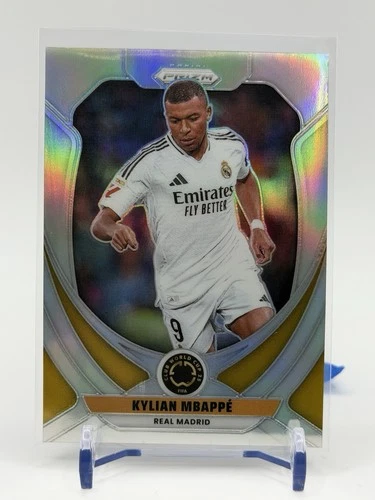
The core of your portfolio. These are cards of established, elite players in premium sets with proven long-term appreciation. Think Messi, Ronaldo, Mbappe, and Haaland in Prizm Silver or Select Premier Level parallels. These cards have deep liquidity on eBay (you can always sell them) and tend to hold value even during market corrections.
Target cards:
- Lionel Messi 2026 Prizm Silver — $246 average
- Kylian Mbappe 2026 Prizm Silver — $167 average
- Kylian Mbappe 2026 Select Base — $150 average
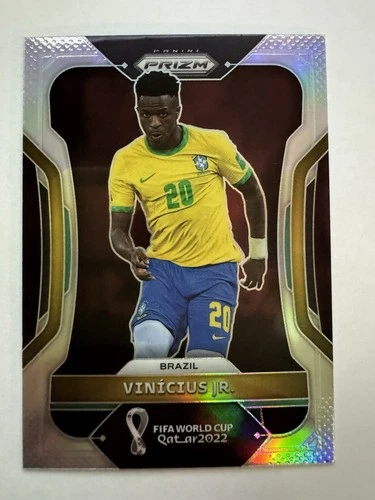
- Vinicius Jr 2026 Prizm Silver — $142 average
Why 40%: These cards act as the ballast of your portfolio. During the 2023 market dip, top-tier Prizm Silvers of elite players dropped 15-20% while speculative cards fell 50-70%. Foundation holdings recover faster and more reliably.
30% — Emerging Players
Young, ascending players who have not yet reached peak valuation. The goal is to acquire cards before the market fully prices in their potential. These players are typically 19-24 years old, performing at a high level in top leagues, and projected for major tournament roles.
Target cards:
- Pedri 2026 Select Base — $80 average
- Jude Bellingham 2026 Prizm Silver — $12 average
- Bukayo Saka 2026 Chrome Refractor — $14 average
- Lamine Yamal — various Prizm and Topps Chrome cards under $30
- Gavi — Select and Prizm cards under $20
Why 30%: This is where the biggest returns come from. If Bellingham leads England to a World Cup semifinal, his $12 Prizm Silver could easily triple. The key is diversifying across 5-8 emerging players so that 2-3 breakouts compensate for the ones who plateau.
20% — Graded Premium
PSA 10 or BGS 9.5 graded versions of key cards. Graded cards command a significant premium over raw copies because they provide authentication, condition certainty, and a standardized quality tier. A PSA 10 Mbappe Prizm Silver might trade at 2-3x the raw price.
Why 20%: Graded cards have the lowest risk of counterfeit issues and tend to be the most liquid during market stress. They also benefit from the growing number of collectors who only buy graded copies. The tradeoff is higher entry cost per card, which limits diversification.
10% — Speculative Positions
High-risk, high-reward bets on transfer rumors, tournament dark horses, or underpriced parallels. This is your "fun money" allocation — positions you are comfortable losing entirely.
Examples:
- Cards of players rumored for big-club transfers
- Low-numbered parallels (/25 or /10) of mid-tier players before a breakout tournament
- New set releases that might become the next Prizm (rare, but it happens)
Why 10%: Limiting speculation to 10% ensures that even a total wipeout of this allocation only reduces your portfolio by a manageable amount. But when a speculative pick hits — a $5 card of a World Cup breakout star shooting to $50 — it delivers outsized returns that boost your overall performance.
Entry Points by Budget
Your starting budget determines not just what you can buy, but how you should allocate across the framework. Here are three model portfolios using real current prices from our database. For specific card picks at every budget level, see our budget breakdown guide.
$500 Budget — The Starter Portfolio
| Allocation | Amount | Sample Holdings |
|---|---|---|
| Foundation (40%) | $200 | 1x Mbappe Select Base ($150) + hold $50 for dips |
| Emerging (30%) | $150 | 1x Pedri Select Base ($80) + 3x budget picks ($70 total) |
| Graded (20%) | $100 | 1x PSA 10 of a mid-tier player |
| Speculative (10%) | $50 | 4-5 cards under $15 each |
Key constraint: At $500, you cannot afford top-tier Prizm Silvers of Messi ($246) or Mbappe ($167) and maintain proper diversification. Focus on Select Base and Chrome cards where your money stretches further.
$2,000 Budget — The Core Portfolio
| Allocation | Amount | Sample Holdings |
|---|---|---|
| Foundation (40%) | $800 | 1x Messi Prizm Silver ($246) + 1x Mbappe Prizm Silver ($167) + 1x Vinicius Jr Prizm Silver ($142) + $245 reserves |
| Emerging (30%) | $600 | 1x Pedri Select Base ($80) + multiples of Bellingham ($12), Saka ($14), Yamal, Gavi |
| Graded (20%) | $400 | 2-3 PSA 10 graded cards of key players |
| Speculative (10%) | $200 | 10-15 sub-$20 cards across various players and sets |
Key advantage: At $2,000, you can hold all three elite Prizm Silvers (Messi, Mbappe, Vinicius Jr) and still diversify across emerging players. This is the sweet spot for most serious collectors entering the investment side of the hobby.
$5,000 Budget — The Premium Portfolio
| Allocation | Amount | Sample Holdings |
|---|---|---|
| Foundation (40%) | $2,000 | Multiple copies of Messi, Mbappe, Vinicius Jr Prizm Silver + low-numbered parallels |
| Emerging (30%) | $1,500 | Deep positions in 6-8 young players across Prizm, Select, and Chrome |
| Graded (20%) | $1,000 | 5-7 PSA 10/BGS 9.5 cards including premium parallels |
| Speculative (10%) | $500 | 25+ speculative positions for maximum optionality |
Key advantage: At $5,000, you can pursue a barbell strategy — concentrating in premium holdings while simultaneously casting a wide speculative net. You can also afford to submit raw cards for grading (at $25-100 per card) and convert them to graded premium holdings over time.
Risk Metrics Every Card Investor Must Track
Professional card investors do not just track price — they monitor a set of risk metrics that signal when to hold, add, or exit a position.
Volatility
Measured as the standard deviation of daily sale prices over the past 30 days. High volatility means the card's price swings wildly between sales — a sign of thin liquidity or speculative activity. Low volatility suggests stable demand and consistent pricing.
- Low volatility (under 15%): Messi Prizm Silver, Mbappe Prizm Silver — deep liquidity, many buyers
- Medium volatility (15-30%): Pedri Select Base, Vinicius Jr Prizm Silver — growing but not yet mature markets
- High volatility (over 30%): Speculative picks, newly released cards — wide bid-ask spreads
Liquidity
How quickly you can sell a card at fair market value. We measure this by the number of eBay sold listings in the past 30 days. A card with 50+ sales per month is highly liquid. A card with under 5 sales per month may require significant price discounting to move quickly.
Rule of thumb: Never allocate more than 5% of your portfolio to any single card with fewer than 10 monthly sales. Illiquid positions are the silent killer of card portfolios — you cannot exit when you need to.
Counterfeit Risk
As card values rise, counterfeit cards become increasingly sophisticated. Prizm Silver cards are among the most commonly faked due to their high value and distinctive refractor finish. Mitigate this risk by:
- Buying from established eBay sellers with 99%+ feedback
- Purchasing PSA/BGS graded cards for holdings above $100
- Learning to identify authentic refractor patterns under different lighting
- Using CardPriceIQ price data to flag suspiciously low listings that may indicate fakes
Population Reports
PSA and BGS publish population reports showing how many copies of each card have been graded at each grade level. A card with only 50 PSA 10 copies in existence has a very different supply profile than one with 5,000 PSA 10s. Monitor pop reports quarterly — sudden increases in graded population can suppress prices.
Sell Signals & Exit Strategy
Knowing when to sell is more important — and more difficult — than knowing when to buy. Most card investors hold too long, watching profits evaporate because they lack a defined exit plan. Here are the sell signals to build into your strategy.
Signal 1: Target Price Reached
Before buying any card, set a target sell price. A simple rule: sell half your position when the card doubles. This locks in your original investment and lets the remaining half ride as a free position. For example, if you buy Bellingham Prizm Silver at $12 and it reaches $24, sell half. Your remaining cards cost you nothing.
Signal 2: Fundamental Deterioration
If a player suffers a serious injury, loses their starting spot, or declines significantly in performance, the investment thesis has changed. Do not hold hoping for recovery — reduce or exit the position immediately. Sunk cost bias destroys card portfolios.
Signal 3: Hype Peaks
Card prices spike during tournaments, transfers, and viral moments. These spikes are almost always temporary. If a card in your portfolio surges 50-100% in a week due to a World Cup performance, strongly consider selling into the hype. The post-tournament correction typically erases 30-60% of the spike within 2-4 weeks.
Signal 4: Market-Wide Corrections
When the overall card market enters a sustained downturn — usually triggered by macroeconomic factors, declining hobby interest, or overprinting — selectively trim speculative positions to raise cash. Use that cash to add to foundation holdings at discounted prices. Market corrections are when the best long-term returns are generated.
Signal 5: Portfolio Rebalancing
If a single card appreciates dramatically and now represents 25%+ of your total portfolio, sell enough to bring it back to 10-15%. Concentration risk is real — even the best card can suffer an unexpected decline.
Real Portfolio Example: $2,000 Starting Capital
Let us walk through a realistic portfolio construction using current market prices from our database.
| Category | Card | Price | Qty | Total |
|---|---|---|---|---|
| Foundation | Messi 2026 Prizm Silver | $246 | 1 | $246 |
| Foundation | Mbappe 2026 Prizm Silver | $167 | 1 | $167 |
| Foundation | Vinicius Jr 2026 Prizm Silver | $142 | 1 | $142 |
| Foundation | Mbappe 2026 Select Base | $150 | 1 | $150 |
| Emerging | Pedri 2026 Select Base | $80 | 2 | $160 |
| Emerging | Bellingham 2026 Prizm Silver | $12 | 10 | $120 |
| Emerging | Saka 2026 Chrome Refractor | $14 | 10 | $140 |
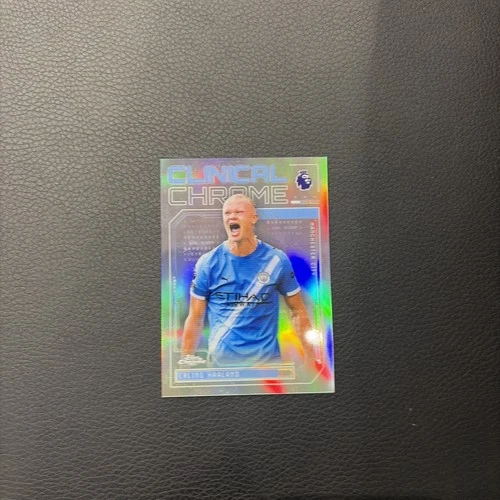
| Emerging | Haaland 2026 Topps Chrome | $11 | 10 | $110 |
| Graded | PSA 10 mid-tier player (reserved) | — | — | $350 |
| Speculative | Various sub-$15 picks | — | — | $200 |
| Total Invested | $1,785 | |||
| Cash Reserve | $215 | |||
Key observations: The foundation allocation ($705) is 35% of the total, slightly below the 40% target — acceptable given the cash reserve. The emerging allocation ($530) is 26%, which will grow as Bellingham, Saka, and Haaland positions appreciate. Keeping $215 in reserve allows adding to positions during dips or buying into a breakout player during the World Cup.
Timing Your Entry: Calendar-Based Strategy
Card prices follow predictable seasonal patterns tied to the soccer calendar. Understanding these cycles allows you to buy low and sell high systematically.
- January-March (League season): Moderate prices. Good buying window for emerging players performing well in domestic leagues.
- April-May (Champions League knockout): Prices spike for players in the semifinal and final. Sell into strength if you hold those players; buy non-CL players at a relative discount.
- June-July (International tournaments): Peak prices across the board during World Cup or Euros. This is SELLING season, not buying season.
- August-September (Off-season lull): The best buying window of the year. Most collectors take a break. Prices drop 10-20% across the board. Load up on foundation holdings.
- October-December (New season + holiday demand): Gradual price recovery. New set releases (Prizm, Select) create excitement and draw money back into the hobby.
With the 2026 World Cup scheduled for June-July across the USA, Mexico, and Canada, expect a massive price surge in Q2 2026. The smart money is buying now — April 2026 — before the tournament hype cycle reaches full intensity.
 \n
\nTax Considerations for Card Investors
In the United States, trading cards sold at a profit are subject to capital gains tax. Cards held for more than one year qualify for long-term capital gains rates (0-20% depending on income). Cards held for less than one year are taxed as ordinary income (up to 37%).
- Keep detailed records of every purchase: date, price, seller, platform fees
- Track all sales: date, price, buyer, platform fees, shipping costs
- Platform fees (eBay's 13.25%, PayPal/payment processing) and shipping costs are deductible against gains
- Grading fees are added to your cost basis, reducing taxable gain
- Consider holding cards for at least 12 months to qualify for long-term rates
Consult a tax professional for advice specific to your situation, especially if your card portfolio exceeds $10,000 in annual sales.
Tools for Tracking Your Portfolio
Successful card investing requires real-time price data and market intelligence. Here are the essential tools:
- CardPriceIQ: Real-time eBay sold prices, trend analysis, and price alerts for soccer cards. Browse our complete soccer card database.
- PSA/BGS population reports: Track how many copies of your cards exist at each grade level.
- eBay sold listings: The primary marketplace and price discovery mechanism for soccer cards.
- Spreadsheet tracking: Maintain a portfolio spreadsheet with purchase date, cost basis, current value, and target sell price for every holding.
Common Mistakes to Avoid
- Buying at the peak: The worst time to buy is when everyone is talking about a card. If you see it on social media, the price has already moved.
- Ignoring liquidity: A card is only worth what someone will actually pay for it. Rare parallels (/5, /10) can be nearly impossible to sell at "market value."
- Over-concentrating: Putting 50%+ of your capital in one player or one set. Injuries, scandals, and overprinting happen.
- Chasing losses: Doubling down on a declining card because you are already invested. Cut losses at 25-30% and redeploy capital.
- Neglecting condition: A raw card with a dinged corner can lose 30-50% of its value. Always use penny sleeves, top loaders, and proper storage.
Frequently Asked Questions
Are soccer cards a good investment in 2026?
Soccer cards can be a strong alternative investment when approached with discipline and proper diversification. The 2026 World Cup is creating a generational demand spike that historically produces significant returns for cards acquired before the tournament. However, like any investment, returns are not guaranteed. Follow the 40-30-20-10 framework, focus on elite players in premium sets, and never invest more than you can afford to lose.
How long should I hold soccer cards before selling?
For foundation holdings (Messi, Mbappe, Vinicius Jr), plan a 3-5 year minimum hold. These cards appreciate as the players' legacies solidify. For emerging players, hold through at least one major tournament cycle (2-3 years). For speculative picks, set a 6-month review window — if the thesis has not played out, exit and redeploy. The 12-month mark is also important for U.S. tax purposes, as it qualifies gains for lower long-term capital gains rates.
What is the safest soccer card to invest in?
PSA 10 graded Lionel Messi Prizm Silver cards from any year are widely considered the safest soccer card investment. Messi's GOAT status is secure, Prizm Silver is the benchmark parallel, and PSA 10 provides authentication and condition certainty. The current average for a Messi 2026 Prizm Silver is $246 — a premium, but one backed by the deepest liquidity pool in the soccer card market.
Should I grade my soccer cards for investment?
Grade cards you plan to hold long-term that are worth $50+ raw. The grading fee ($25-100 depending on service speed) is justified by the premium a PSA 10 or BGS 9.5 commands — typically 1.5-3x the raw price. Do not grade sub-$20 cards unless you are confident in a PSA 10 grade and the graded value exceeds $60+. For speculative picks you plan to flip quickly, sell raw to avoid the 3-6 month grading turnaround time.
How do I protect my soccer card investment from counterfeits?
Buy from reputable eBay sellers with extensive feedback histories. For cards over $100, strongly prefer PSA or BGS graded copies — the authentication alone is worth the premium. Learn the physical characteristics of authentic Prizm refractors (the rainbow shift pattern under light should be smooth and consistent, not pixelated or dull). Use CardPriceIQ to flag listings priced suspiciously below market — if a Messi Prizm Silver is listed at $80 when the average is $246, it is almost certainly a fake or a damaged card misrepresented as near-mint.
Ready to start building your soccer card portfolio? Track real-time soccer card prices on CardPriceIQ — View Prices
Continue reading our Investment Playbook series: