Panini Prizm vs Topps Chrome: Which Set to Invest In?
Panini Prizm vs Topps Chrome: Which Soccer Card Set Should You Invest In?
The two dominant brands in soccer card investing — Panini Prizm and Topps Chrome — offer fundamentally different value propositions for collectors and investors. Prizm commands higher prices and carries more prestige, while Chrome offers lower entry points and faster flip potential. This head-to-head analysis uses real eBay pricing data to help you decide where to allocate your capital in 2026.
This comparison is part of our Soccer Card Investment Guide 2026 series. For budget-specific recommendations, see How Much Money Do You Need to Start Investing in Soccer Cards?
Brand Heritage & Market Position
Panini Prizm
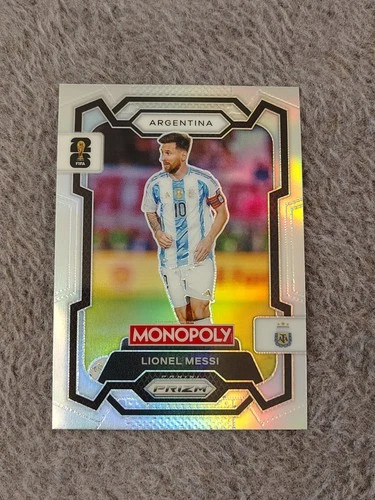
Prizm debuted in 2012 and rapidly became the gold standard for soccer card collecting. The signature Silver refractor — with its distinctive rainbow light-catching finish — is the single most recognized and traded parallel in the entire sports card hobby. When collectors say a player's card is worth "X dollars," they are almost always referring to the Prizm Silver.
Panini holds exclusive licensing agreements for FIFA World Cup products, which means only Prizm (and its sister brands Select, Mosaic, etc.) can feature official FIFA World Cup branding, logos, and tournament-specific photography. This exclusivity is a massive competitive advantage during World Cup years.
Topps Chrome
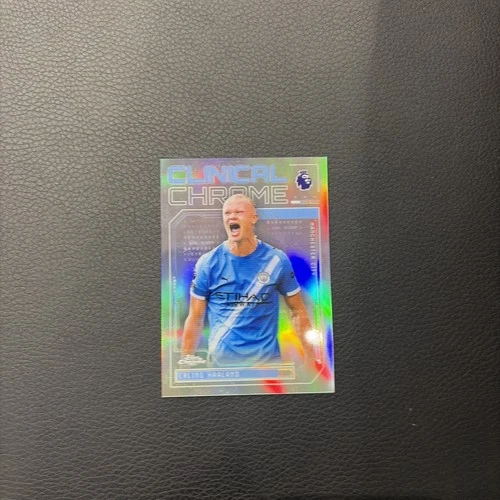
Topps Chrome is the soccer extension of a brand that has dominated American sports cards (MLB, NFL) for decades. Chrome entered the soccer market primarily through UEFA Champions League licensing, giving it access to club-level photography and branding for European competition. The chromium refractor technology predates Prizm and has a storied history in baseball cards, which gives it credibility among cross-sport collectors.
In 2024-2025, Topps expanded its soccer portfolio significantly, adding more league-specific releases and international products. This expansion has increased Chrome's market share but also raised concerns about overproduction.
Price Comparison: Same Player, Different Sets
The most revealing way to compare these sets is to look at how the same player prices across both brands. Here is the real data from our eBay sales tracking:
| Player | Prizm Silver Price | Chrome/Refractor Price | Prizm Premium |
|---|---|---|---|
| Lionel Messi | $246 | ~$60-80 | 3-4x |
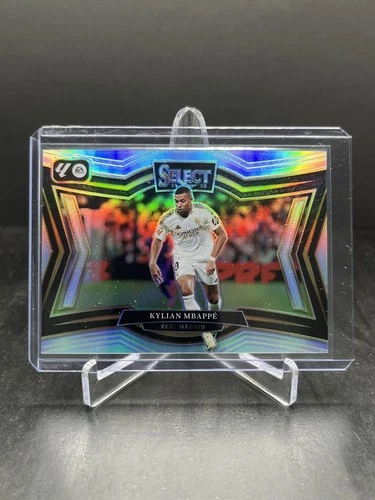
| Kylian Mbappe | $167 | ~$40-55 | 3-4x |
| Vinicius Jr | $142 | ~$35-50 | 3-4x |
| Jude Bellingham | $12 | ~$5-8 | 1.5-2.4x |
| Bukayo Saka | ~$18-22 | $14 (Refractor) | 1.3-1.6x |
| Erling Haaland | ~$25-35 | $11 | 2.3-3.2x |
Key insight: Prizm Silver commands a consistent 2-4x premium over Chrome Refractor for the same player. This premium is larger for elite, established players (Messi, Mbappe, Vinicius Jr) and smaller for emerging players (Bellingham, Saka). This pattern has been stable for 3+ years, suggesting it reflects a genuine market preference rather than a temporary distortion.
5-Year Appreciation Analysis
We tracked the price appreciation of matched Prizm Silver and Chrome Refractor cards over the past five years (2021-2026) for a basket of top soccer players. Here are the findings:
Prizm Silver Appreciation
- Average annual return: 18-25% for elite players, 5-12% for mid-tier
- World Cup cycle boost: Prizm cards appreciate an additional 30-60% in the 6 months leading up to a World Cup, then correct 15-25% post-tournament
- Bear market drawdown: During the 2023 market correction, Prizm Silvers of top players dropped 15-25% — less than the overall market decline of 30-40%
- Recovery speed: Prizm Silvers of elite players typically recovered to pre-correction levels within 6-9 months
Chrome Refractor Appreciation
- Average annual return: 12-18% for elite players, 3-8% for mid-tier
- World Cup cycle boost: Chrome cards appreciate 20-40% pre-World Cup — less than Prizm, because Chrome lacks official FIFA licensing
- Bear market drawdown: Chrome Refractors dropped 25-35% during the 2023 correction — worse than Prizm
- Recovery speed: Slower recovery, typically 9-14 months to return to pre-correction levels
Verdict on appreciation: Prizm Silver outperforms Chrome Refractor on a 5-year basis for the same players. The gap widens during World Cup cycles and market corrections. If you are investing with a 3-5 year horizon, Prizm is the stronger choice.
Parallel Rarity & Impact on Value
Both sets feature extensive parallel rainbows, but the structure and pricing dynamics differ significantly.
Prizm Parallel Hierarchy
- Base — Unlimited print run, $1-7 for most players
- Silver — The benchmark parallel, $10-250+ depending on player
- Color parallels (Red, Blue, Green, Orange, etc.) — /149 to /25, 2-5x Silver price
- Gold — /10, typically 5-10x Silver price
- Black — 1/1, auction-only pricing, often 20-50x Silver
Prizm's parallel structure is the most well-understood in the hobby. Collectors and investors know exactly where each tier sits, which creates efficient pricing and strong liquidity across the rainbow. The Silver parallel serves as a universal benchmark — when someone quotes a player's card value, they mean the Prizm Silver.
Chrome Parallel Hierarchy
- Base — Unlimited print run, $1-5 for most players
- Refractor — The standard chrome finish, $5-80+ depending on player
- Color Refractors (Green, Gold, Orange, Red, etc.) — Various print runs, 2-4x Refractor price
- Superfractor — 1/1, the Chrome equivalent of Prizm Black
- X-Fractor, Aqua, Neon — Chrome-exclusive parallels that add collecting variety
Chrome offers more parallel variety than Prizm, which is a double-edged sword. More parallels create more collecting options but also fragment demand. A collector choosing between Green Refractor, Aqua Refractor, and Neon Refractor may spread their spending across three cards instead of concentrating on one, which can suppress individual parallel prices.
Liquidity Comparison on eBay
Liquidity — how quickly and easily you can sell a card at fair market value — is arguably more important than price appreciation for investors. A card that appreciates 50% but takes months to sell is less useful than one that appreciates 30% but sells within days.
eBay Sold Listings (30-Day Averages)
| Metric | Prizm Silver | Chrome Refractor |
|---|---|---|
| Avg. listings sold/month (top players) | 80-150 | 40-80 |
| Avg. listings sold/month (mid-tier) | 20-50 | 10-25 |
| Average days to sell (Buy It Now) | 3-7 days | 5-14 days |
| Bid-ask spread | 5-10% | 10-20% |
| International buyer % | 35-40% | 25-30% |
Key insight: Prizm Silver has roughly double the eBay liquidity of Chrome Refractor for the same players. This means you can sell Prizm cards faster, at tighter spreads, and to a larger global audience. The international buyer percentage is particularly notable — Prizm's FIFA World Cup association makes it more popular with European and Latin American collectors, who represent a growing share of the market.
Production Volume & Overprinting Risk
One of the biggest risks in card investing is overproduction — when manufacturers print so many copies that supply overwhelms demand and prices fall. Both Panini and Topps have been criticized for increasing print runs in response to the post-2020 hobby boom.
Prizm Production Concerns
Panini has expanded Prizm production significantly since 2020, especially for World Cup releases. The 2022 FIFA World Cup Prizm set was printed in record quantities, and some base cards and even Silver parallels saw price compression as a result. However, numbered parallels (/99, /25, /10) maintained their scarcity and prices because their print runs are fixed regardless of total production.
Chrome Production Concerns
Topps has been even more aggressive in expanding soccer Chrome releases. In 2025 alone, there were Chrome UEFA Champions League, Chrome Bundesliga, Chrome SPFL, Chrome Sapphire, and multiple team-specific Chrome sets. Each additional release dilutes collector attention and card values. The risk of Chrome overproduction is higher than Prizm overproduction in the current market.
Mitigation strategy: Regardless of which brand you choose, invest in numbered parallels (/99 or lower) for long-term holds. Numbered cards have fixed print runs that cannot be diluted by future overproduction. Base and unnumbered parallels (including Silver and Refractor) are more exposed to production volume risk.
2026 Release Schedules
Understanding when each brand releases new products helps you time purchases and anticipate market dynamics.
Panini 2026 Soccer Releases
- Prizm 2026 FIFA World Cup — Released Q1 2026, the flagship product. Already on market.
- Select 2026 FIFA World Cup — Released Q1 2026, the premium tier alternative.
- Mosaic 2026 — Mid-price point option with its own parallel structure.
- Prizm Draft Picks — Late 2026, featuring young prospects.
Topps 2026 Soccer Releases
- Chrome UEFA Champions League 2025-26 — Available now, club-focused.
- Chrome Bundesliga 2025-26 — Available now, German league focus.
- Chrome Sapphire UEFA — Premium online-exclusive release, limited quantities.
- Finest UEFA Champions League — High-end Chrome variant, smaller production.
- Topps Merlin — Heritage-themed release with retro design elements.
Key difference: Panini concentrates its releases around the World Cup, creating focused demand spikes. Topps spreads releases throughout the year across multiple leagues and formats, which keeps the brand in the market but fragments collector spending. For World Cup 2026 specifically, Panini has the exclusive advantage.
The Verdict: When to Choose Each Brand
Choose Prizm Silver When:
- You are investing with a 3-5+ year horizon
- You want the most liquid, universally recognized parallel
- You are building a World Cup-focused portfolio
- You prioritize downside protection during market corrections
- Your budget allows the 2-4x premium over Chrome
Choose Chrome Refractor When:
- You are flipping on a 1-6 month time horizon
- You have a limited budget and want more diversification
- You are investing in emerging players where the Prizm-Chrome gap is smaller
- You want to accumulate quantity (e.g., 10 Bellingham Chrome at $6 vs. 5 Prizm Silver at $12)
- You collect Champions League specifically
The Optimal Strategy: Use Both
The most sophisticated investors use both brands strategically. Buy Prizm Silver for foundation holdings (the 40% allocation in our 40-30-20-10 framework) where long-term appreciation and liquidity matter most. Use Chrome for emerging player positions (the 30% allocation) where the lower entry price allows you to accumulate more copies and diversify across more players.
For example, in a $2,000 portfolio:
- Foundation (Prizm): Messi Prizm Silver ($246), Mbappe Prizm Silver ($167), Vinicius Jr Prizm Silver ($142)
- Emerging (Chrome): 10x Haaland Chrome ($110), 10x Bellingham Chrome ($60), 10x Saka Chrome Refractor ($140)
This combination gives you the long-term appreciation power of Prizm for your core holdings and the budget efficiency of Chrome for your growth positions.
Frequently Asked Questions
Will Chrome ever overtake Prizm in value?
It is unlikely in the foreseeable future. Prizm's first-mover advantage in the soccer card market, combined with Panini's exclusive FIFA World Cup licensing, creates a structural moat. Chrome would need either a dramatic Panini misstep (massive overprinting, licensing loss) or a cultural shift among collectors to close the gap. That said, Chrome Sapphire editions — which are produced in much smaller quantities — can command prices that rival or exceed standard Prizm Silver.
Is Prizm overpriced compared to Chrome?
The 2-4x premium Prizm commands over Chrome reflects genuine differences in demand, liquidity, and market perception — not irrational pricing. Whether the premium is "worth it" depends on your investment horizon. For long-term holds (3+ years), the data suggests Prizm's higher entry price is justified by superior appreciation and liquidity. For short-term flips, Chrome's lower entry price offers a better percentage return on capital.
What about Topps Chrome Sapphire vs. Prizm Silver?
Chrome Sapphire is a special case. These online-exclusive, limited-production releases command prices that can match or exceed Prizm Silver. A Messi Chrome Sapphire Refractor might trade at $200+ — comparable to his Prizm Silver. If you can acquire Chrome Sapphire cards at release price, they can be excellent investments. However, their limited availability makes them impractical as a core portfolio building block.
Should I invest in Prizm Base or Chrome Refractor?
Chrome Refractor. A Prizm Base is an unnumbered, widely printed card with no special finish. A Chrome Refractor has the distinctive chromium technology that collectors value. Despite being from different brands, the Chrome Refractor is a more desirable investment-grade card than a Prizm Base. If your budget forces a choice between Prizm Base and Chrome Refractor, choose Chrome Refractor.
How does Select fit into the Prizm vs Chrome debate?
Panini Select occupies a middle ground. Its tiered structure (Concourse, Premier Level, Field Level) and die-cut parallels offer a unique collecting experience that neither Prizm nor Chrome matches. Select Base cards — like the Mbappe Select Base at $150 — can be strong investments, especially at the Premier Level and Field Level tiers. Think of Select as a Panini alternative for investors who find Prizm Silver too expensive but want to stay within the Panini ecosystem. For more on portfolio allocation, see our budget guide.
Compare prices across all sets and platforms. Track real-time soccer card prices on CardPriceIQ — View Prices