Topps Chrome vs Panini Prizm: Which Cards Grade Higher?
Topps Chrome vs Panini Prizm: Which Soccer Cards Grade Higher?
Two sets dominate the modern soccer card hobby: Panini Prizm and Topps Chrome. Both are chromium-based refractor products with deep parallel rainbows, strong collector demand, and significant graded premiums. But when it comes to grading outcomes — PSA 10 rates, common defects, and price premiums by grade — the two sets are meaningfully different.
This guide provides a side-by-side comparison using real grading data and eBay sold prices tracked by CardPriceIQ to help you decide which cards from each set are worth submitting for professional grading.
Manufacturing Quality: Where the Differences Start
The grading outcome of any card is primarily determined by its manufacturing quality — the physical attributes the card has straight out of the pack, before any handling occurs. Topps Chrome and Panini Prizm differ significantly in their production processes, and those differences show up in grading results.
Card Stock and Thickness
Topps Chrome uses a proprietary chromium stock that is slightly thicker and more rigid than Panini Prizm. This rigidity is a double-edged sword:
- Advantage: Chrome cards resist bowing and warping better than Prizm, which means they maintain flat surfaces through normal handling. Surface flatness contributes to higher surface grades.
- Disadvantage: The stiffer stock is more prone to visible corner dings on impact. A corner hit that would cause a soft, barely visible dent on a Prizm card can create a sharper, more visible ding on Chrome.
Panini Prizm uses a slightly thinner, more flexible card stock. This makes Prizm cards more forgiving on corners and edges but more susceptible to warping in humid conditions.
Surface Quality
This is where Topps Chrome has its biggest manufacturing advantage. The Chrome refractor coating is generally cleaner and more consistent than Prizm's, with fewer factory-origin defects:
- Chrome: Print dots and surface lines are relatively rare. The refractor layer bonds cleanly to the base card stock. Under magnification, Chrome surfaces tend to be smooth and defect-free.
- Prizm: Factory print lines on the refractor coating are a well-documented issue. These fine lines run horizontally or vertically across the card surface and are visible under angled light. They are a production artifact, not handling damage, but graders still penalize them. Community estimates suggest 15–25% of Prizm refractors have visible print lines.
Centering
Both sets struggle with centering, but Prizm has a worse reputation in the collector community:
- Chrome: Centering is generally adequate, with an estimated 50–60% of base and refractor cards meeting PSA 10 centering standards (55/45 or better on both axes).
- Prizm: Centering is Prizm's Achilles heel. Community data suggests only 30–40% of Silver Prizm parallels meet PSA 10 centering thresholds. Left-right centering tends to be worse than top-bottom, and the issue is more pronounced on colored parallels than on base cards.
PSA 10 Rates: Chrome vs Prizm
Based on PSA population reports and community submission data, here is how the two sets compare on PSA 10 rates:
| Metric | Topps Chrome | Panini Prizm |
|---|---|---|
| Estimated PSA 10 rate (all submissions) | 55–65% | 40–55% |
| Most common grade-limiting factor | Corners | Centering |
| Factory defect rate (print lines, dots) | 5–10% | 15–25% |
| Centering pass rate (55/45 or better) | 50–60% | 30–40% |
| Average submission grade | PSA 9.3 | PSA 9.0 |
The takeaway: Chrome has a materially higher PSA 10 rate than Prizm, primarily because of better centering consistency and fewer surface defects. However, Prizm's lower PSA 10 rate means that PSA 10 Prizm cards carry a higher scarcity premium relative to their raw price — which paradoxically can make them better grading investments when you find a truly mint copy.
Price Premium by Grade: Which Set Benefits More from Grading?
We compared the graded premium (PSA 10 price / raw price) for comparable cards across both sets:
Top-Tier Players
| Card | Raw Price | PSA 10 Est. | Premium |
|---|---|---|---|
| Messi Prizm Silver | $246 | $500+ | 2.0x |
| Messi Topps Chrome Refractor | ~$180 | $340+ | 1.9x |
| Mbappe Prizm Silver | $167 | $350+ | 2.1x |
| Mbappe Topps Chrome Refractor | ~$120 | $230+ | 1.9x |
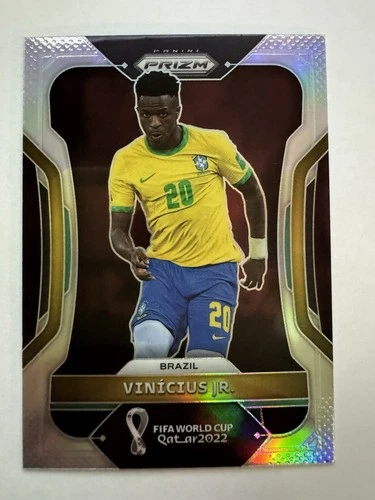
| Vinicius Jr Prizm Silver | $142 | $280+ | 2.0x |
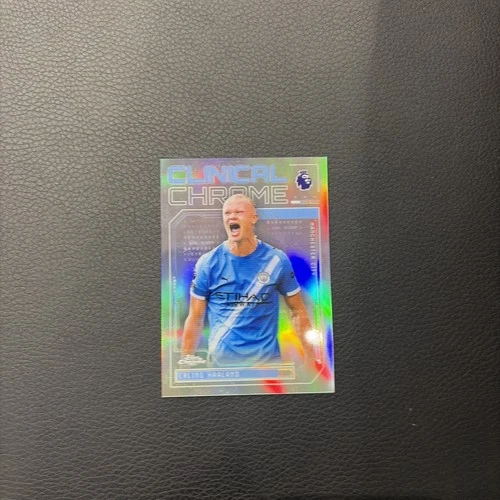
| Haaland Topps Chrome Base | $11 | $22–$28 | 2.0–2.5x |
Premium multipliers are similar across sets for top players, but Prizm has a slight edge (2.0–2.1x vs 1.9x) because PSA 10 Prizm copies are scarcer relative to submissions. For mid-tier and budget players, the dynamics shift:
Mid-Tier Players
| Card | Raw Price | PSA 10 Est. | Premium |
|---|---|---|---|
| Bellingham Prizm Silver | $12 | $25–$30 | 2.1–2.5x |
| Bellingham Topps Chrome Refractor | ~$9 | $18–$22 | 2.0–2.4x |
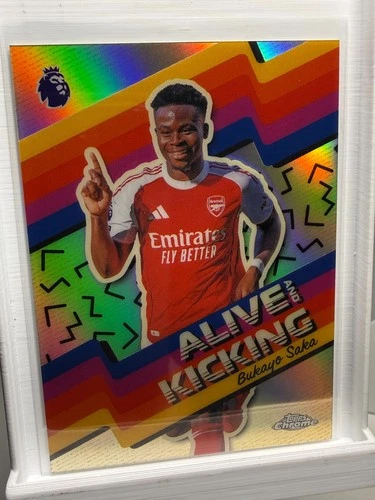
| Saka Chrome Refractor | $14 | $28–$35 | 2.0–2.5x |
| Saka Prizm Silver | ~$10 | $20–$25 | 2.0–2.5x |
At the $10–$20 raw price range, neither set produces profitable grading returns after fees unless you are using bulk/economy submissions. The percentage premiums look similar, but the dollar amounts are too small to overcome grading costs. For more on whether these cards justify grading fees, see our Prizm grading value analysis.
Which Players to Grade in Which Set
The optimal grading strategy depends on which set the player's most valuable or most liquid card comes from.
Grade in Prizm
- Lionel Messi: His Prizm Silver is the single most traded graded soccer card on eBay. PSA 10 demand is massive and consistent. Prizm is Messi's highest-value standard card.
- Kylian Mbappe: Prizm Silver commands higher raw and graded prices than Chrome equivalents. The Prizm brand dominance with Mbappe is clear.
- Vinicius Jr: Prizm Silver is his flagship card. Chrome versions exist but trade at a discount.
- Lamine Yamal: Prizm is expected to be his most sought-after set by a wide margin.
- Any Panini-exclusive player: Some leagues and players appear only in Panini products (certain La Liga and Serie A releases).
Grade in Chrome
- Erling Haaland: Chrome is traditionally strong for Bundesliga and Premier League players. Haaland's Chrome cards have a dedicated following, and the higher PSA 10 rate makes Chrome submissions more reliable.
- Jude Bellingham: His Topps Chrome UEFA Champions League cards are iconic. Chrome is arguably his more recognizable set.
- Bukayo Saka: The Chrome Refractor at $14 raw is his most affordable premium card, and Chrome's print quality makes PSA 10s easier to achieve.
- Florian Wirtz: Topps Chrome Bundesliga is his home set. Grade Chrome over Prizm for Wirtz.
- Any UCL-focused card: Topps has the UEFA Champions League license. For UCL-specific cards, Chrome is the only chromium option.
BGS Subgrade Comparison: Where Each Set Loses Points
BGS subgrade data provides granular insight into exactly where each set falls short. Here is the typical subgrade profile for an "average" submission of each set:
Topps Chrome Typical BGS Subgrades
- Surface: 9.5 (excellent — Chrome's strongest attribute)
- Corners: 9.0 (the weak point — Chrome's rigid stock shows corner hits more readily)
- Edges: 9.5 (good edge quality overall)
- Centering: 9.5 (better than Prizm on average)
Panini Prizm Typical BGS Subgrades
- Surface: 9.0 (print lines are the culprit — frequent enough to bring down the average)
- Corners: 9.5 (flexible stock absorbs minor hits without visible damage)
- Edges: 9.5 (comparable to Chrome)
- Centering: 8.5–9.0 (the set's well-known weakness)
This data reveals an important strategic insight: if you are submitting to BGS, Chrome cards are more likely to achieve the coveted 9.5+ across all four subgrades (a "Quad"). For Prizm, the centering subgrade is the most common reason cards receive BGS 9 instead of BGS 9.5.
Community Preferences and Market Perception
Beyond the objective manufacturing and grading data, market perception influences pricing in ways that matter for your grading strategy:
Prizm's Brand Power
Panini Prizm has become the "default" soccer card brand — similar to how Topps Chrome dominates in baseball. When casual collectors or new hobbyists think "soccer cards," they think Prizm. This brand recognition translates to:
- Higher raw prices for equivalent players
- More eBay listings and faster sales velocity
- Greater international demand (Prizm is the dominant brand in European, Asian, and South American markets)
Chrome's Quality Reputation
Serious grading-focused collectors tend to favor Chrome because they know the PSA 10 rates are higher and the cards present better in slabs. The Chrome Sapphire Edition (online exclusive) has developed a cult following that rivals Prizm Silver in per-card value for top players.
Licensing Dynamics
A significant factor going forward: Topps acquired the Panini soccer license beginning in 2026. This means future products may merge elements of both brands. For the 2026 vintage specifically, both Prizm and Chrome exist as separate products, but collectors are already speculating that this could be the final year of Panini-branded soccer Prizm — adding potential long-term collector premium to 2026 Prizm cards.
Our Recommendation: A Hybrid Strategy
The optimal grading strategy uses both sets strategically:
- Grade Prizm Silver for star players you plan to sell. The liquidity and brand recognition premium means your graded cards sell faster and for more money. Just be ruthless about centering pre-screening — only submit Prizm cards with clearly 55/45 or better centering.
- Grade Chrome for personal collection pieces. The higher PSA 10 rate means you are more likely to get that satisfying gem-mint slab back. Chrome cards also tend to look better in slabs due to their superior surface quality.
- Use Chrome for budget grading. If a player's Chrome version is cheaper than their Prizm equivalent (which it often is), the grading ROI can actually be better for Chrome because the grading fee is a smaller percentage of the raw price, and the PSA 10 premium percentage is similar.
- Consider CGC for mid-value Chrome cards. Chrome's higher gem-mint rate combined with CGC's lower fees creates the best ROI equation for $15–$50 cards. See our full grading guide for CGC pricing tiers.
Frequently Asked Questions
Does Topps Chrome or Panini Prizm hold value better long-term?
Historically, Prizm has been the stronger long-term hold for soccer cards. The brand's dominance in the global soccer collecting market creates consistent demand. However, with Topps acquiring Panini's soccer license, the landscape may shift. 2026 could be a pivotal year — the last Panini Prizm soccer set could become a collector's item in its own right, similar to how the final Fleer basketball sets command premiums. Check current prices for both sets on CardPriceIQ.
Are Topps Chrome Sapphire cards worth grading?
Absolutely. Chrome Sapphire Edition cards are among the most valuable non-numbered soccer cards available. The online-exclusive nature limits supply, and the sapphire-blue refractor finish is visually stunning in a slab. PSA 10 Sapphire Messi or Mbappe cards can command 3–5x the standard Chrome refractor price. The higher price point easily justifies PSA Regular or Express tier grading fees.
Why does Prizm have worse centering than Chrome?
Panini's printing and cutting process has been criticized by collectors for years. The issue appears to be related to registration alignment during the cutting phase — the printed image is not consistently aligned with the die-cut boundaries. Topps uses a different cutting process (potentially laser-guided) that produces more consistent results. Panini has improved centering over the years, but 2026 Prizm still shows higher centering variance than 2026 Chrome.
Should I grade Chrome base or only refractors?
For Chrome, grade refractors of star players and skip base cards unless they are worth $30+ raw. Chrome base cards without the refractor finish trade at relatively low premiums even graded. The refractor is what makes a Chrome card collectible — base Chrome is essentially an upgraded version of a standard Topps card. Our storage guide covers how to protect both base and refractor cards properly while you decide what to submit.
If I can only grade 10 soccer cards this year, how should I split between Chrome and Prizm?
A reasonable split: 6–7 Prizm Silver cards of high-value players (the cards most likely to sell at a premium) and 3–4 Chrome Refractors of players where Chrome is the stronger brand (Haaland, Bellingham, UCL-specific cards). Prioritize cards worth $75+ raw for PSA submission, and consider CGC for anything in the $20–$75 range. Pre-screen every card for centering and surface issues before finalizing your submission.
Track real-time Topps Chrome and Panini Prizm prices on CardPriceIQ → View Prices